Hey Shad! Glad you could wander away from the work insanity to pop in... hmm financial advice... Worry is a debt paid for a bill you might never owe
 Hello Teel
-unfortunately I am relegated to admiring Antonio from afar :sigh: yet I still dream
 Hi Rose
-I totally forgot about the eclipse... when I let the dog out later in the evening I was looking at the moon and thinking how brilliantly bright it was, didn't remember about the eclipse till I saw the images on the late night news
 Big hug to all the busy chicks wandering around in their various parts of the world, good energy for your endeavours ladies
Was prowling around the Psychology Today website and found this, thought you all might find it interesting

Ready to slim down? Use the following techniques from leading experts to help you shed pounds and get healthy--for good.
1. Set modest goals
"It's better to make small, sustainable changes rather than dramatic ones that are short-lived," says Foster. So if you drink three sodas a day, for instance, try cutting back to two. "Small successes build bigger ones."
Even modest goals should be specific and measurable. Jennifer Carter, Ph.D., a sports-psychology consultant at the Ohio State University Sports Medicine Center, says that achievable goals are those you can control. For example, increasing exercise by five minutes a day is more within your power than losing five pounds by Friday. The same goes for food. Instead of vowing to eat more vegetables in general, pledge to order a salad with dinner. Try to focus on the nutritious foods you'll add, rather than what you'll cut out, O'Neil suggests, or you might set yourself up for cravings that lead to bingeing.
2. Track your progress
Self-monitoring, observing and recording your behavior, is one of the most powerful weight-loss tools. "When people write down at least 75 percent of their eating and exercising behaviors, they often succeed in losing weight and maintaining weight loss," says Daniel Kirschenbaum, Ph.D., a psychology professor at Northwestern University Medical School. In one 12-week program, participants who used self-monitoring consistently lost 64 percent more weight than those who did not, and they had maintained the loss three months later.
Tracking your behavior makes you more aware of what you're actually doing. As O'Neil notes, "We often have conveniently forgiving memories," which makes forgetting extra calories--such as those gleaned from midafternoon, unplanned snacks--all too easy. Tracking also helps you remain focused and it reveals progress, which boosts morale and resolve.
Keep a journal of everything you eat and do, including activities such as gardening or lifting heavy boxes, and record total calories and fat consumed. Kirschenbaum also recommends weighing yourself once a week. If you find you've gained three or more pounds, take immediate action; it will make losing the weight much easier.
3. Learn to love exercise
If you enjoy your workout, you'll want to do it. It's that simple. Jay Kimiecik, Ph.D., an associate professor of exercise psychology at Miami University in Ohio, has shown that people who successfully maintain any regimen learn to change their focus from distant outcomes ("I will fit into my favorite outfit by my reunion") to positive experiences in the present ("Dance class gets my creative juices flowing"). Kimiecik calls it "intrinsic motivation," meaning doing something for its own sake. "If you don't get something out of every single run or spinning class," he says, "you won't continue doing it."
To make exercise more immediately rewarding, find aspects to enjoy right now, Kimiecik suggests. If you like the outdoors, try hiking, biking or jogging. If you're sociable, try a team sport such as volleyball, or find a workout partner. If you're spiritual, try yoga or tai chi. Take a similar tack with food: Make a salad more appetizing by adding toasted nuts; enhance water's flavor with a slice of fresh lemon.
4. Adopt the "I think I can" attitude
Every time you pass up a brownie or walk an additional five minutes, recognize your progress. In one study, Edward McAuley, Ph.D., a kinesiology professor at the University of Illinois at Urbana-Champaign, told one group of people who had just exercised that they were in great shape and another group who had also exercised that they were in poor shape. He then had both groups exercise again and found that the participants who thought they were more fit reported less fatigue and a higher sense of well-being. This, McAuley believes, indicates that people who feel in control of their workouts are likely to perform better.
To boost confidence, use what psychologists call positive self-talk, internal dialogue in which you cheer yourself on. Instead of berating yourself for stopping before completing 12 dumbbell repetitions, for example, congratulate yourself for doing a solid set of 10 and look forward to trying again. In one study of Olympic gymnasts, researchers found that the more positive their self-talk, the easier it was for them to excel.
5. Enlist social support
Studies show that lack of support easily derails efforts, while a little encouragement goes a long way toward keeping you on track. Ask friends, family and co-workers to help--by not leaving fattening treats around, for example, or watching the kids while you exercise. "Let people know what kind of assistance they can provide," says O'Neil. "Little things help a lot." He also recommends using social support to maintain motivation. "Get an exercise buddy so you've got peer pressure and a commitment to someone else to work out," he says. "You'll also have more fun."
6. Visualize success
You can easily envision yourself blowing off the gym or devouring a piece of pie. But now try to imagine walking through the gym door and working out for a full hour, or saying no when your waiter suggests dessert. Experts say we often have trouble achieving our goals because our mental movies are ones of failure. To turn luck around, rewrite your script.
Rehearse in your mind how you will look and feel as you run an extra half-mile. For the most effective imagery, make it as vivid and detailed as possible, says Brent Rushall, Ph.D., in his book Imagery Training in Sports. He recommends conjuring the image of your desired success several times, picturing the whole environment and every sense that would come into play. Then do everything you've just imagined. When you can envision success, you're more likely to achieve it.




 You all have been very busy! I am very well and Jen is almost 100% too. I have been asked to volunteer for the next 3 days and won't be back here to post till probably fri nite or Saturday. I just did not want to disappear and have you all think I ran out into the street to play happily in traffic or something equally dangerous!
  the days will be a bit long but the extra $$ is needed. 2 days will be here and one uptown. so I have cut out the computer and any office time. This way I won't be stressed and still have some down time for Mel. Hope you all have a great week and take good care of each other. I will miss you all but there just aren't enough hours in the day. It's already after 9:30 and I still need a shower! I could never keep this up till Friday! LOL Getting too old to burn the candle at both ends. wish me well and see you all soon! wish there was a pic of Antonio on my bedroom ceiling!!! Sweet dreams all and good morning Sunshine!







 I musy have looked horrified 'cos he said "Hmmn! You don't like that idea much, do you!?" Anyway he decided to leave me be for two weeks and then to go back and see him. If he is still not completely satisfied with how things are going then he "promises" to send me to an E.N.T. specialist and they still might want to cut out the gland before it can cause anymore mischief at a later date...
 You can have him! I don't think he looks quite my type and I would hate to see you deprived of your "hunk!" And I think you are enormously clever writing poetry to him...

 hope you dont pack dh if he sits around to long


 Apparently she often gets one when she has been out in the garden and I think they have been and gone..


 I did however forget to discuss with him how to come off it gently and not be as ill as last time when I basically came off "cold turkey" and had terrible withdrawal symptoms. So I will not change over until I have talked it through with him. I really cannot face going through that again. I felt just like a drug addict! Shakes and shivers and stomach cramps.....****!!!

 so he managed to purchase a number from out Teel's way. This is the same man who supports letting the elderly purchase less expensive drugs from our friends in Canada up north. Too bad I won't be eligible to vote this man to another term again. Point is tho that I don't think Mel will have to chase people down - in fact they may take her hostage if they think she has a lead on finding some shots.
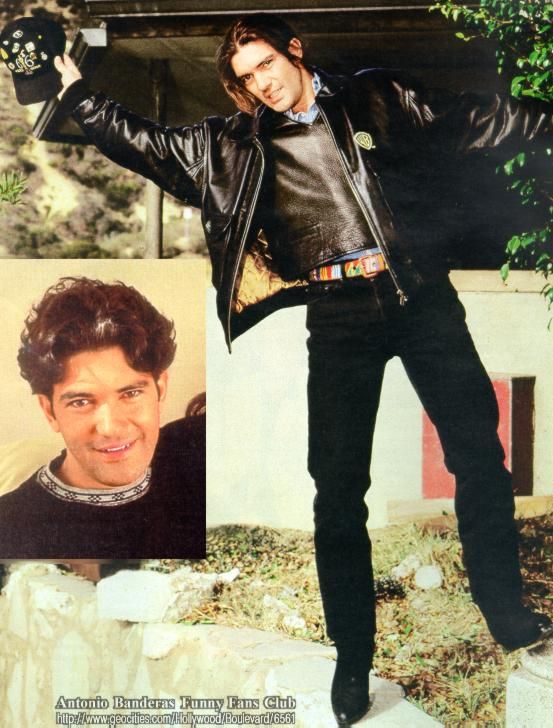
  Impressive pictures of Antonio there Meadow. Had to laugh about the comment of Melanie's face melting tho. Actually I think her lips are going to explode one day from one too many collegen injections. I used to think she was pretty in a young cutie sort of way but at one point I think she had some horribly gone wrong facial work. There is a point where you should just accept that your hottie days are over and age gracefully. But that's my opinion. Makes me happy I was never a hottie - I don't have my looks to lose but my personality gets better and better with time (or so I'm told).
  I am not a happy bunny today. I got on the scales! And I have gained 4 lbs...
 I know I haven't been an
  but I didn't expect to put on that much. Why is this task such a difficult one? Why is it so impossible to achieve something that I really want to do? I was on a roll there for a few weeks and now it seems I have fallen flat on my face.
 I need to know how to withdraw from Oxycontin without going cold turkey. I should have remembered to ask him on Tuesday when I was sitting in front of him, but my brain forgot to remind me to do this simple task!
 What about a complete u-turn in what you do? What does your heart tell you about what you REALLY want to do? I get worried when friends are struggling and sad with their lot...
