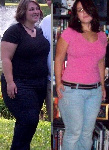
I agree that calorie counting and walking are a great place to start. It's where I started, but don't get discouraged if they don not feel extremely doable. When I started, they were both barely possible, so don't be discouraged if you find them virtually impossible - that's ok, just take the steps as slow as you have to, and don't be ashamed to scale back.
When I started, walking in the sense that we usually consider to be "exercise" wasn't possible at all. When I tried to walk more than a few steps, my knees, hips and lower back were in such pain that I'd end up in bed for three days after walking only 5 to 10 minutes.
That's why I had to start with the pedometer and count my walking in steps rather than minutes - I couldn't walk long enough or far enough to register on the pedometer I had - I had to go out and buy a step counting pedometer so that I could measure my progress in steps.
If you can find a way to walk in water, I'd highly recommend it. I was extremely lucky in both major cities in which I lived to find a warm water arthritis exercise program (I found mine through the Arthritis Foundation website.
http://www.arthritis.org/aquatics.php
Often these programs are at local YMCA's, but some communities have dedicated warm water pools. The warmer the water, the easier it is on joints. Before I had arthritis, I always wondered why our local YMCA kept their pool so warm - I hated it because it made swimming intensely uncomfortable (I would get overheated too easily). Now I wish every community had a warm water pool.
Our local warm water pool keeps the air and water temperature at about 90 to 92 degrees. This is awesome, because you can walk right into the water without any "adjustment" period. No shivering or getting used to the water, and often these pools have steps or ramps to enter the water - or even lift chairs.
When I started, the YMCA arthritis program was too cold for me (the water temp between 82 and 85). All my joints would freeze up.
The 90 degree water was just perfect (that the pool had a ramp to get into the water was sublime).
It actually took me several years to get healthy enough to be able to stand the adjustment period of cooler water. Our warm water pool kept getting more expensive per visit, and I was getting healthy and strong enough to want to go to the pool more than twice a week, so we went to our local YMCA and bought a one month membership to see if I could get adjusted to the cooler water. The closest pool kept the temp at 82 and the branch across town had two pools and kept one at 86 - we drove across town to use the warmer pool, and it took about the full month for me to adjust to the cooler temperature.
I found a 3/4 length sleeve blouse in Goodwill that was made of a swimsuit-like lycra material and I wore it over my swimsuit top to help me stay warm (I was literally tempted to special-order long-sleeve swimming apparel designed for surfers and divers - but the prices in my size were far out of our reach).
As for calorie counting, that also presented challenges, because of our financial situation and my insulin resistance, prediabetes, and low thyroid issues. To lose weight I had to cut calories to ridiculously low levels. And when I cut calories low enough to lose weight, I had absolutely no energy - the fatigue was so severe I wouldn't be able to keep my eyes open, and didn't even have the energy to prepare a meal (hubby was taking care of me and even helping me to the bathroom at times I'd feel so weak).
And on so few calories, I'd be so hungry all I could think about was food. It was unbearable. I couldn't sleep because of the hunger and if I ate enough to bring the hunger from unbearable to just unpleasant, I wouldn't lose weight.
When my doctor recommended low-carb (but warned not to go too low) I was really skeptical, because low-carb had always made me I'll (because I was going too low - I had to experiment to find the right level). I also wasn't sure how we'd afford to eat low-carb because most affordable foods are extremely high in carb.
Low-carb turned out to be a lifesaver for me. Not only could I eat more calories and still lose, the "rabid hunger" disappeared.
Eating low-carb on a very tight budget is a challenge. For protein I ate mostly dark meat chicken (thigh quarters from Aldi at 69 to 89 cents per pound) and a ground beef tvp mixture I concocted from the cheapest ground beef I could find (79 cents a pound) and dry tvp from the healthfood store at$2.49 a pound - but one pound of tvp is equivalent to about 3 to 4 lbs of ground meat - so the equivalent of 65 cents per pound (If you type kaplods and tvp into the search bar you'll find my recipe).
For veggies, we'd buy onions, cabbage (tons and tons of cabbage), celery and carrots and whatever was on sale for the cheapest price (Aldi frozen veggies were a godsend).
When you're very disabled and on a severe-poverty budget, eating low-carb is more challenging, so you have to get creative, but it's worth it.
You do need to know though whether you have kidney problems, so talk to your doctor before starting a low-carb diet, to make sure it's safe. Most people (even people with kidney problems) can low-carb safely, but the diet isn't safe for some kidney disorders.
Ignore the low-carb advice about "induction flu," being normal. If you're healthy and fit, induction flu isn't a terrible concern, but if you have blood sugar problems, it can be dangerous as well as unpleasant. If you feel sick on low-carb, don't assume it's normal and that you just have to suck it up. If you feel sick, eat more frequently and/or increase your calorie or carb intake. Do it gradually so you can find the carb level that is both comfortable and effective.
I recommend a low-carb exchange plan like that on Frugalabundance.com. I started with their "High Protein" 1800 calorie plan. You might want to start at the middle of the road plan and gradually trade the carby exchanges for protein ones.

 Tiger Tears , 09-14-2012 01:34 AM
 alaskanlaughter , 09-14-2012 02:07 AM
 Mountain Mamma , 09-14-2012 12:25 PM

 angelskeep , 09-19-2012 07:51 PM