I didn't realize I was carb-addicted, because my carbs-of-choice weren't sweets they were mostly savory foods in sweet/savory sauces - meats with barbecue sause, sweet and sour asian dishes...
Then I read "The End of Overeating," by David Kessler, and I realized that the salt/fat/sugar (or starch) combination fit all of my trigger foods.
It truly is an "addictive" combination. So even a little bit can set off insane cravings.
I also believe a meal plan is important, but the perfection mind-set isn't. It's very easy to get into the "I've blown it" mentality, where even one small slip gives a person permission to eat out of control until they can "start fresh" tomorrow morning (or if the slip happens on Wednesday or later - permission to start fresh Monday morning, and if the slip happens after the 23rd of the month, permission to start the 1st of the month, or the first Monday of the month).
We "learn" to diet by what we see and hear others do, talk about and write about. Most of what we learn doesn't work, so we have to try something different.
Have a plan, but know that your instincts are going to be filled with booby traps, because we've learned and internalized those traps. We think we need many things that we don't. We don't need a perfect plan. We don't need to be perfect on that plan. We don't need a specific amount of time, money, or even motivation to start.
I had almost no motivation when I started, and almost no confidence in my ability to succeed. I was able to succeed despite myself (although it was incredibly slow gowing when I was my own biggest obstacle).
For me, it started with deciding that while I might not be able to lose weight, I was certainly able to maintain weight - so I focused on maintaining my weight first and foremost (so if I didn't lose, I didn't have an excuse to binge because I thought a gain wasn't any worse than a non-loss. With maintenance always as my first goal, there was always a very good reason for not letting an off-plan bite, become a binge worthy of the name "food bender."
When I started, my hubby and I were in an extremely tight finances. Our income was too high for food stamps (by less than $50), and our medical and prescription drug expenses were through the roof (and we didn't qualify for assistance programs because the same income guidelines were used as for food stamps).
We weren't always on the run, but I was extremely ill, nearly bed-ridden. I couldn't cook when my husband was working, so all the food had to be ready to eat (which is a similar challenge to being on the run and having little time to cook).
I chose exchange plan dieting, because I was most familiar with exchange plans, but my doctor recommended low-carb, so I found a low-carb exchange plan.
Because there are inexpensive foods in each food (exchange) category, we bought whatever was cheapest to fill those categories (cheap fats and starches were a lot easier to find than cheap proteins, and fresh fruits and veggies - so we ate a lot of canned and frozen veggies and a lot of tvp, ground beef, chicken, and beans).
I used tvp (soy protein) to extend ground beef. And I browned it with cheap ground beef. I'd make a huge batch and freeze it in "crumbles" so I could use it in recipes when I needed it. That way, I could make enough for several weeks worth of meals and just scoop out what I needed. For example, I'd heat a 1/2 cup of the meat mixture in the microwave with a squirt of barbecue sauce to make a sloppy joe mixture to put over a microwave baked potato.
My tvp recipe and other super-cheap recipes are on my 3FC blog
this page has the tvp recipe (second recipe on the page)
http://www.3fatchicks.com/diet-blogs/kaplods
Because my doctor wanted me on low-carb diet, I had to find or create a low-carb exchange plan. I did find a low-carb exchange plan like the one described in this pdf (the food plans are listed on the last few pages). The low-carb plan is called a high-protein food plan.
I experimented with different carb-levels and calorie levels, but more often than not, I used an exchange plan. I tried some non-counting plans like Atkins, South Beach and Primal Blueprint, but I found that I did best with a plan that had portion-control limits, so I took what I learned from those plans and applied them to my exchange plan.
Here are the exchange plans, I'm talking about
http://www.frugalabundance.com/exchange-plan-diet.pdf
Probably the biggest change I made was never allowing myself to believe that I had "blown it." I also had to get the idea of "starting over," completely out of my mind. When I thought I had the opportunity to "start over," it always meant a binge before the starting over point.
As I've been saying frequently, if weight loss were mountain climbing, most of us would never survive it, because at the first stumble, we'd throw ourselves off the nearest cliff in order to "start fresh."
There is no starting fresh or starting over, there's just moving on. All of my failed attempts weren't failures, they were successes in learning what didn't work. I didn't have to be perfect, I just had to do better.
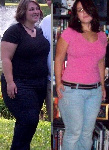
It's taken me 7 years to lose 94 lbs, so I'm obviously a very slow learner - and yet it's success like I've never experienced it before. All of my life (from the age of 5 until 38) I was always gaining or losing, I was never maintaining (because I was following the rules - the fail-doomed popular ways to lose weight).
My guiding thought was "I may not be able to lose weight, but I can maintain the loss I've had so far, and while I'm at it, I'll try to lose one more pound."
I've lost most of the 94 lbs, 1 lb at a time. And while I've had a few small stumbles, I've never let myself backslide intentionally. I've slid a few pounds back, but I got up and kept moving forward. It's really hard to believe that I haven't had a significant backslide - but only because I've picked myself up before I could slide back more than a few pounds.
Part of that for me, was learning to weigh myself every day without feeling discouraged by the normal scale fluctuations. I couldn't afford to go a week without weighing on the scale, because I could easily gain 20 to 30 lbs in a week (I've done it before).
But by defining "not gaining" as the main priority, most days I got to celebrate (when only losing counted for anything, I would be deeply disappointed when I weighed daily. When maintenance is success, I got to celebrate more days than not).
I don't know what if any of my little monologue here will help you, but I threw it all out there, in case any of it does. As I mentioned, I highly recommend the shoestring meal forum, because there are tons of budget friendly tips and recipes. They've been a life and weight loss saver.


















 No gagging-reflex crappy low-fat anything!
  Is it OK for me to eat a cheeseburger from time to time? YOU BETCHA! I enjoy pretty much everything - just less of it. And it also makes it easy for me when it comes down to "Do I REALLY want a frozen margarita for 700 calories?" - usually I choose NOT to imbibe, but have a nice 150 calorie glass of wine or a 100 calorie light beer instead.