


************************
This Week's Veggie is: Zucchini (Summer Squash)!

We planted zucchini in our garden last year and you would never believe how big they got! Here’s a pic of me holding one of them:
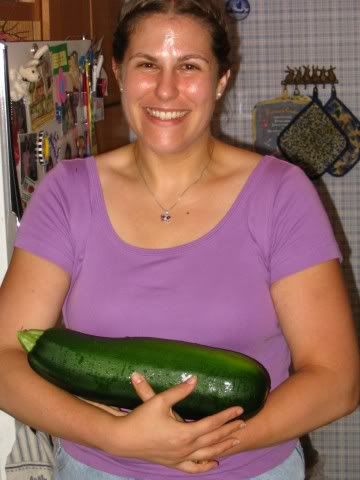
A friend of mine and I were talking last night about these veggies and how good they are on the grill. She said she didn’t really like them any other way…she steamed some and gave them to her 18 month-old son and she swears he actually learned to say the word ‘yuck’!

Truth be told, I think these are pretty easy to eat and add to your diet. They’re versatile, easy to find, and inexpensive in the summer. Hope you enjoy trying them if you haven’t before!
Quote:
From: About.com
Zucchini varieties
As implied by the term summer squash, zucchini's prime season is May to August, although they are now available year-round. Summer squash has a thin, soft skin and soft edible seeds, whereas winter squash has a hard skin. The zucchini is a long, cylindrical vegetable, slightly smaller at the stem end, usually dark green in color. The flesh is a pale greenish-white and has a delicate, almost sweet flavor. Zucchini fruit grows quickly and is harvested within 2 to 7 days of flowering. Over-ripe zucchini and those past their prime can be bitter, but that didn't stop a New York gardener from growing the world's longest zucchini, a whopping 69 and a half inches!
Newer varieties include the golden zucchini and the globe or round zucchini. The golden variety is somewhat milder in taste than the dark green. The globe variety is about the size of a softball, about 3 inches in diameter -- perfect for stuffing. Zucchini is not to be confused with marrow squash (also called vegetable marrow) which looks like a larger version of the zucchini with white stripes.
Zucchini selection
Handle zucchini with care as they are easily damaged. Look for a moist stem end and a slightly prickly, yet shiny skin as indicators of freshness. Ideally, green zucchini should be no more than 6 inches long and one to two inches in diameter, with firm skin free of cuts or bruises and at least one inch of stem still attached. Baby fingerling zucchini is a popular new item in the markets and with home gardeners who can pick them at any time. Fingerlings can be steamed, sautéed, or pickled whole. Another favorite with home gardeners is zucchini blossoms, stuffed or not, dipped in egg, spices, and flour, and fried golden. Picking the flowers actually encourages more fruit. Some markets are now carrying squash blossoms, often with a tiny zucchini attached. Look for bright, perky flowers with no wilting. Flowers should be sprinkled with water, wrapped gently in paper towels and refrigerated. Use as quickly as possible.
Zucchini storage
Store zucchini in a plastic bag in the refrigerator crisper drawer four to five days and do not wash it until just before you are ready to use it. At the first sign of wilting, use immediately. Softness is a sign of deterioration. Cooked zucchini should be covered and refrigerated up to two days. To freeze, slice zucchini into rounds, blanch for two minutes, plunge into cold water, drain and seal in airtight containers or baggies. Frozen zucchini can be kept for ten to twelve months.
Zucchini cooking tips
If your zucchini is overly large, it will have more water. Some chefs prefer to drain large zucchini of its water before proceeding with a recipe, much like as is done with eggplant. To drain, cut into slices and arrange them in a shallow dish; sprinkle uniformly with coarse salt and let drain for 20 to 30 minutes. Strain under cold water, pat dry and proceed with recipe.
Zucchini is a good source of Vitamins A and C, and is low in calories making it an excellent choice for dieters. No need to peel or seed, and young zucchini can be eaten raw in salads. It's completely edible once the stem end is trimmed. Due to its high water content, zucchini is best steamed or cooked as quickly as possible with a minimum of water added. Ratatouille is a signature dish made with zucchini, sweet peppers, eggplant, and tomatoes. Just remember, overcook zucchini and you end up with mush. There is no way to salvage it other than to make soup.
More information on Zucchini:From: About.com
Zucchini varieties
As implied by the term summer squash, zucchini's prime season is May to August, although they are now available year-round. Summer squash has a thin, soft skin and soft edible seeds, whereas winter squash has a hard skin. The zucchini is a long, cylindrical vegetable, slightly smaller at the stem end, usually dark green in color. The flesh is a pale greenish-white and has a delicate, almost sweet flavor. Zucchini fruit grows quickly and is harvested within 2 to 7 days of flowering. Over-ripe zucchini and those past their prime can be bitter, but that didn't stop a New York gardener from growing the world's longest zucchini, a whopping 69 and a half inches!
Newer varieties include the golden zucchini and the globe or round zucchini. The golden variety is somewhat milder in taste than the dark green. The globe variety is about the size of a softball, about 3 inches in diameter -- perfect for stuffing. Zucchini is not to be confused with marrow squash (also called vegetable marrow) which looks like a larger version of the zucchini with white stripes.
Zucchini selection
Handle zucchini with care as they are easily damaged. Look for a moist stem end and a slightly prickly, yet shiny skin as indicators of freshness. Ideally, green zucchini should be no more than 6 inches long and one to two inches in diameter, with firm skin free of cuts or bruises and at least one inch of stem still attached. Baby fingerling zucchini is a popular new item in the markets and with home gardeners who can pick them at any time. Fingerlings can be steamed, sautéed, or pickled whole. Another favorite with home gardeners is zucchini blossoms, stuffed or not, dipped in egg, spices, and flour, and fried golden. Picking the flowers actually encourages more fruit. Some markets are now carrying squash blossoms, often with a tiny zucchini attached. Look for bright, perky flowers with no wilting. Flowers should be sprinkled with water, wrapped gently in paper towels and refrigerated. Use as quickly as possible.
Zucchini storage
Store zucchini in a plastic bag in the refrigerator crisper drawer four to five days and do not wash it until just before you are ready to use it. At the first sign of wilting, use immediately. Softness is a sign of deterioration. Cooked zucchini should be covered and refrigerated up to two days. To freeze, slice zucchini into rounds, blanch for two minutes, plunge into cold water, drain and seal in airtight containers or baggies. Frozen zucchini can be kept for ten to twelve months.
Zucchini cooking tips
If your zucchini is overly large, it will have more water. Some chefs prefer to drain large zucchini of its water before proceeding with a recipe, much like as is done with eggplant. To drain, cut into slices and arrange them in a shallow dish; sprinkle uniformly with coarse salt and let drain for 20 to 30 minutes. Strain under cold water, pat dry and proceed with recipe.
Zucchini is a good source of Vitamins A and C, and is low in calories making it an excellent choice for dieters. No need to peel or seed, and young zucchini can be eaten raw in salads. It's completely edible once the stem end is trimmed. Due to its high water content, zucchini is best steamed or cooked as quickly as possible with a minimum of water added. Ratatouille is a signature dish made with zucchini, sweet peppers, eggplant, and tomatoes. Just remember, overcook zucchini and you end up with mush. There is no way to salvage it other than to make soup.
Basic info on Zucchini from Produce Oasis Nutritional information is the best part here.
Comparison chart of vegetables Fantastic information on a variety of veggies, including nutritional information.
Basic information on Zucchinis
Good basic information from Produce Oasis about artichokes.
Other information on Veggies:
Better Homes and Gardens Slide Show on using spring vegetables, including recipes and info on veggies
FAQ for the 5-a-day program on Fruits and Veggies
Tips on Fruits and Veggies from the CDC
Vegetables: How to cook, serve, and store these healthy foods from Mayo Clinic
Recipes:
Lemon Rosemary Zucchini This Phase 1 recipe sounds really tasty!

Zucchini Patties Phase 2 recipe that is incredible…like potato pancakes, but healthier, cheesier and almost starch-free!
Lots of Zucchini Recipes from About.com